
InBody Scan Accuracy: How Reliable Body Composition Results Really Are
You step onto the InBody scanner, hold the handles, and less than a minute later you have a printout full of numbers: body fat percentage, skeletal muscle mass, body water and more. The natural next question is, "How much should I trust this?"
Here is the short answer on InBody scan accuracy: InBody scans are very good at tracking changes over time and less precise for a single, exact body fat number. Used the right way, they give a far more useful picture than the bathroom scale or BMI alone. At Culver Pediatrics Center, we offer InBody scans to teens over 16, young adults and parents, and this guide explains what the research shows, what can throw off your results, and how to get readings you can rely on.
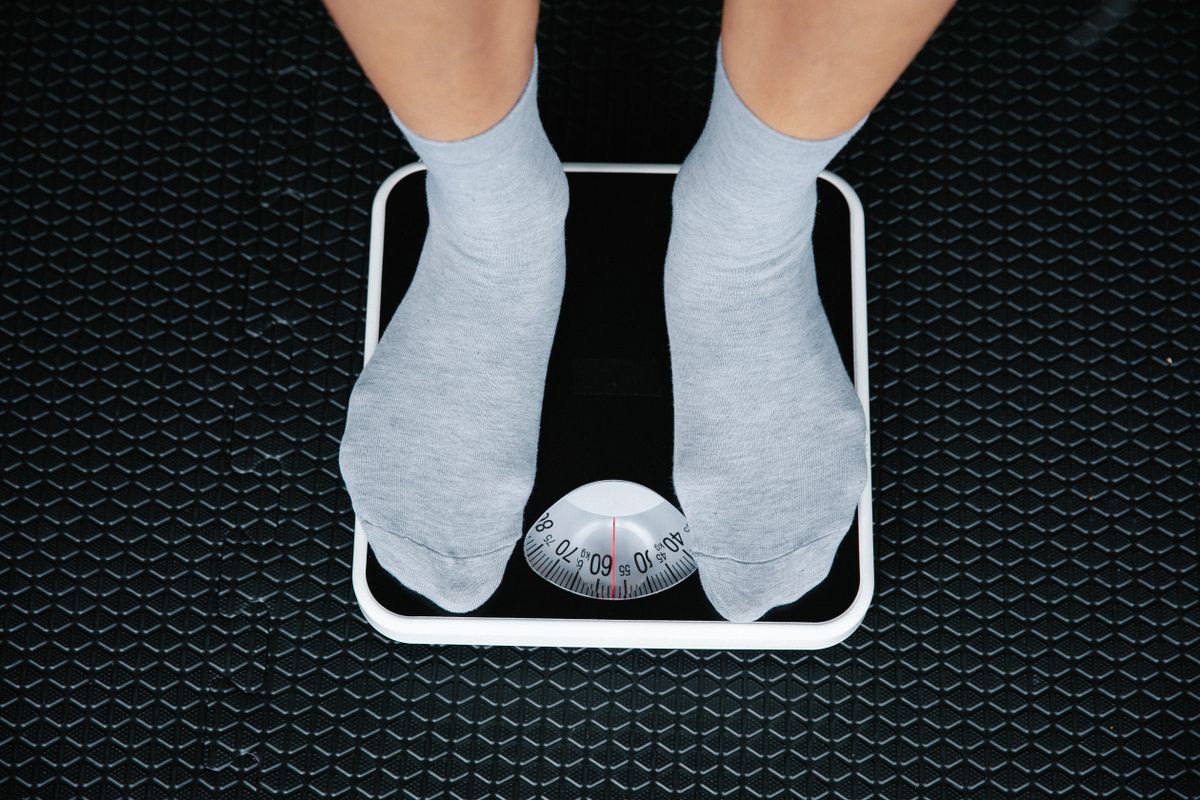
A scale shows weight. Body composition shows what that weight is made of. (Photo: Pexels)
Key Takeaways
InBody uses bioelectrical impedance analysis (BIA). It estimates body fat from how a tiny electrical signal moves through body water. It does not measure fat directly.
Studies show InBody results line up closely with DEXA scans, but body fat readings can run a few points off for an individual.
For results you can compare, test under the same conditions each time. For scans at Culver Pediatrics Center, arrive fasting, skip exercise for at least 12 hours (water is fine), and use the restroom first.
What Is an InBody Scan?
An InBody scan is a type of body composition analysis. Instead of telling you only what you weigh, it estimates what that weight is made of: muscle, fat, water and minerals.
How It Works
InBody devices use bioelectrical impedance analysis. A very small, painless electrical current passes through your body via the hand and foot electrodes. Water conducts electricity well, and fat does not. By measuring the resistance (impedance) at several frequencies, the device estimates your total body water, then your fat-free mass, and from that your body fat.
InBody says its devices use multiple frequencies to measure the water inside and outside your cells, and that they do not rely on "empirical equations" based on age, gender or ethnicity. Even so, body fat is still a calculated estimate, not a direct measurement.
What the Report Shows
Depending on the model, an InBody report can include weight, total body water, lean body mass, dry lean mass, skeletal muscle mass, body fat mass and percent body fat. On models such as the InBody 570, the test takes about 50 seconds.
How Accurate Is an InBody Scan?
To judge accuracy, researchers compare InBody results with reference methods such as DEXA (also called DXA), a low-dose X-ray scan often used in research to measure body composition.
InBody vs DEXA: What Studies Show
Strong agreement in direction. In a 2017 study of 150 children ages 7 to 12 published in PLOS ONE, InBody body fat results correlated closely with DXA (r = 0.976 in boys and 0.925 in girls). A correlation near 1.0 means the two methods rank people very similarly.
But a consistent offset. In that same study, InBody underestimated body fat percentage compared with DXA by about 3 percentage points in boys and about 4.5 points in girls. The authors advised that results "should be interpreted with caution."
Good for groups, less precise for individuals. A 2014 study of overweight and obese teens in BMC Pediatrics used a different brand of multi-frequency BIA device. It found the device tracked average change well across the group, but it was "inaccurate for the individual obese adolescent."
Very consistent, but the gap varies by device. A 2021 study of 127 children found two separate InBody 270 units agreed with each other almost perfectly. Yet that model overestimated body fat compared with DXA, the opposite direction from the 2017 study, and the authors discouraged using it for clinical prescription.
Repeatable. A study in the British Journal of Nutrition found small repeat-test variation for body composition devices, 3% or less.
What This Means for You
Think of an InBody scan like a well-calibrated bathroom scale that is consistently a few pounds off. You might not get the exact "true" body fat number, but if you test the same way each time, the trend is reliable. InBody itself notes that "any skewed results will be consistent from test to test," which is why your first scan works best as a baseline.
Key Clinical Takeaway: In a study of 150 children, InBody body fat results tracked DEXA very closely (r = 0.976 in boys), yet ran about 3 to 4.5 percentage points lower on average. Another model in a different study read higher. Use InBody to follow your own trend, not to compare your exact number with someone else's.
What Can Throw Off Your InBody Results?
Because BIA depends on body water, anything that shifts your fluid balance can change your numbers.
How to Prepare for Your Scan at Culver Pediatrics Center
Follow our clinic's instructions so your results are comparable from visit to visit:
Arrive fasting. Do not eat before your appointment. Water is allowed.
Avoid exercise for at least 12 hours before your scan.
Use the restroom before your scan. Urine in the bladder is counted in your weight.
Book repeat scans at the same time of day so each reading is taken under the same conditions.
Other Factors That Can Skew Readings
Manufacturer and hospital guidance point to a few more factors to keep in mind:
Exercise: The InBody 770 manual notes that "even light exercise can change your body composition temporarily."
Illness: InBody advises testing only after you have fully recovered.
Caffeine and alcohol: Some clinics, such as OhioHealth, advise avoiding both for 24 hours before testing.
Menstruation: Some clinic guidance suggests not testing during your period, because fluid shifts can skew results.
Implants: Tell staff before testing if you have any implant or a stainless steel allergy.

For athletes and active teens, muscle and fat matter more than the number on the scale. (Photo: Pexels)
Who Should Not Have an InBody Scan?
People with implanted electronic medical devices, such as pacemakers or defibrillators, should not have an InBody scan. The InBody 770 manual states that people with these devices "must not use this equipment." If you have any implanted device, are pregnant, or have a heart condition, ask your clinician before testing.
InBody vs BMI: Why Body Composition Adds Information
Body mass index (BMI) uses only height and weight. The CDC notes that BMI "does not directly measure body fat" and "does not distinguish between fat, muscle, and bone mass." A muscular teen athlete can have a high BMI with little body fat, and a person with a "normal" BMI can still carry low muscle and higher body fat.
For children and teens ages 2 to 19, the CDC uses BMI-for-age percentiles:
Underweight: below the 5th percentile
Healthy weight: 5th to below the 85th percentile
Overweight: 85th to below the 95th percentile
Obesity: 95th percentile or greater
BMI is still a useful screening tool, and the CDC notes that the AAP's Bright Futures guidelines recommend checking it yearly starting at age 2. Body composition testing simply adds detail, especially for athletes, teens working on strength, and adults tracking muscle during weight loss. This matters more than ever: CDC data show obesity among U.S. children and teens ages 2 to 19 rose from 13.9% (1999 to 2000) to 21.1% (2021 to 2023).
How to Use Your InBody Results
Get a baseline. Your first scan is your starting point, not a grade.
Retest under the same conditions. InBody suggests testing every 2 to 4 weeks under the same conditions if you are tracking change.
Watch muscle and fat together. Losing weight while keeping muscle is very different from losing muscle. This matters for anyone on a weight loss medication. Our post on preserving muscle mass while on GLP-1 medication explains why.
Focus on health, not a single number. Energy, strength, sleep and lab results matter as much as any percentage.
Review results with a clinician. A trained eye can put your numbers in context with your age, sport, growth and health history.
InBody Scans at Culver Pediatrics Center
At Culver Pediatrics Center, InBody body composition analysis is available for individuals over 16 years of age, and you do not need to be a Culver Peds member to book. As listed on our website, a single scan is $50, and a package of 4 monthly scans is $150, which makes it easy to follow your trend over time. Prices may change, so please confirm current pricing when you book. Each scan comes with a detailed printout and a brief walkthrough of your results from Nurse Becca.
When to Seek Immediate Medical Attention
An InBody scan is a wellness and tracking tool. It does not diagnose disease. Talk with your clinician about what you notice in your body, not just what the printout says.
Schedule a visit with your clinician if you or your teen:
Has unexplained weight loss or gain, or a big change in muscle without a clear reason
Feels unusually tired, weak or short of breath with normal activity
Wants to start a weight loss plan or medication and needs guidance
Reach out promptly if a teen:
Becomes preoccupied with body fat numbers, skips meals, restricts food, or exercises compulsively. These can be early warning signs of an eating disorder, and early support matters.
Call 911 or go to the emergency room for:
Fainting, chest pain, a racing or irregular heartbeat, or severe dizziness
Signs of severe dehydration, such as confusion or very little urine
Frequently Asked Questions
How accurate is an InBody scan compared with DEXA?
Studies show InBody results correlate strongly with DEXA, but body fat percentage can differ by a few points for an individual. In one study of children, an InBody model read about 3 to 4.5 points lower than DXA. Another study found a different model read higher. The direction and size of the gap vary by device and person, so InBody is best used to track your own trend over time.
Does InBody directly measure body fat?
No. InBody measures how an electrical signal moves through body water, then calculates fat-free mass and body fat from that. The body fat number is an estimate.
Why did my InBody results change from one day to the next?
Hydration, recent meals, exercise, bathroom timing and time of day can all shift readings. Following the same prep each time (at Culver, arrive fasting with no exercise for 12 hours) gives the most comparable results.
How much does an InBody scan cost at Culver Pediatrics Center?
As listed on our website, a single InBody scan is $50, and a package of 4 monthly scans is $150. Membership is not required. Please confirm current pricing when you book.
Who should not get an InBody scan?
People with pacemakers, defibrillators or other implanted electronic devices should not be tested. If you are pregnant or have a heart condition, check with your clinician first.
About the Author
This article was written by the team at Culver Pediatrics Center and medically reviewed by Dr. Noemi Adame, MD, a board-certified pediatrician with more than 20 years of experience, licensed in Indiana and Ohio. Dr. Adame leads Culver Pediatrics Center, a concierge and Direct Primary Care pediatric practice in Culver, Indiana, built around a "Veggies Over Pills" philosophy that pairs holistic, whole-child care with evidence-based Western medicine. You can learn more about her on the Culver Pediatrics Center team page.
Medically reviewed by Dr. Noemi Adame, MD. Last reviewed: October 28, 2026.
Partnering with Culver Pediatrics Center
Numbers mean more when someone helps you understand them. At Culver Pediatrics Center, you receive a detailed printout of your results, and Nurse Becca gives you a brief explanation so you can track your progress over time. Our InBody service is data-focused and does not include nutritional counseling, lab work or ongoing individual support, so bring your results to your own clinician for a full health plan.
Book Your InBody Scan at Culver Pediatrics Center Today to start tracking your progress with a clear baseline.
Medical Disclaimer
This content is for educational purposes only and does not constitute formal medical advice, diagnosis, or treatment. Always consult a qualified healthcare physician regarding your or your child's health.
Sources
Culver Pediatrics Center. InBody Composition Analysis
InBody USA. Technology
InBody USA. InBody Test (test preparation)
InBody. InBody 770 User's Manual
OhioHealth. Body Composition Analysis patient instructions
Lee LW, et al. Validity of multi-frequency BIA in children compared with DXA. PLOS ONE, 2017
Wan CS, et al. Bioelectrical impedance analysis to estimate body composition in obese adolescents. BMC Pediatrics, 2014
Larsen MN, et al. Validity of InBody 270 in children compared with DXA. PLOS ONE, 2021
Jensky-Squires NE, et al. Validity and reliability of body composition analysers in children and adults. British Journal of Nutrition, 2008
CDC NCHS. QuickStats: Prevalence of Obesity and Severe Obesity Among Persons Aged 2 to 19 Years, 1999 to 2023
